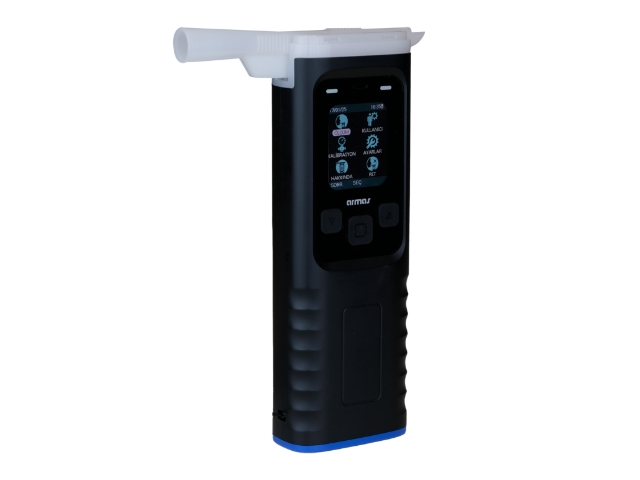
In logistics, the moment that matters most for road safety is rarely the moment a supervisor is standing nearby. Trucks leave the yard before dawn, run for days between terminals, and are often driven by subcontracted or agency drivers the head office has never met. That is why logistics fleet alcohol testing cannot rely on occasional gate checks alone — it has to be built into the operation itself.
This guide looks at alcohol screening from the operator's side: long-haul and night departures, multi-depot networks, subcontractor management, customer audits and central reporting. If you are still comparing device categories, start with our vehicle breathalyzer selection guide and return here for the fleet-specific picture.
Where Screening Gaps Appear in a Logistics Operation
A commercial fleet is a moving organisation. The same company may dispatch vehicles from several depots at once, run overnight linehauls, and hand return loads to drivers who have not seen the main terminal in days. Posting screening staff at every gate is expensive, slows dispatch, and still leaves the longest stretch of the journey — everything after departure — uncovered.
| Operating scenario | Screening gap | Recommended approach |
|---|---|---|
| Long-haul and linehaul routes | Driver is away from base for days; no checkpoint at rest stops | Move the check into the vehicle with an alcohol ignition interlock |
| Night and early-morning departures | No supervisors on site outside office hours | In-vehicle pre-trip screening that works without staff present |
| Multi-depot and terminal networks | Inconsistent practice from one site to another | One standard across all sites: in-vehicle checks, central records |
| Subcontracted and agency drivers | High driver turnover; identity of the person tested is unclear | Screening combined with driver identity verification |
| Return legs and intermediate stops | A single check at dispatch does not cover the whole journey | A check repeated at every engine start |
Pre-Trip Screening That Scales With the Fleet
The most reliable form of truck driver alcohol screening is the one that does not depend on anyone being there to run it. An alcohol ignition interlock ties the check to the vehicle itself: the truck will not start until the driver completes it. Our vehicle alcohol interlock systems are built around this principle, and the NAMLock-10 family covers configurations from standalone units to engine-locking and telematics-connected versions. The rule is applied identically at 3 a.m. in a remote terminal and at 9 a.m. at headquarters — which is exactly what fleet compliance requires.
Subcontractors and Agency Drivers: Identity Is the Weak Point
Operators who flex capacity with subcontracted hauliers or agency drivers face a question permanent-staff fleets rarely ask: is the person completing the check actually the person driving? Where turnover is high and faces change weekly, a commercial fleet breathalyzer programme is only as strong as its identity verification. This is why ARMAS developed the INT-CAM camera module, which photographs and records the screening moment, and INT-FACECAM, which uses face recognition to confirm the check was completed by the registered driver. Writing in-vehicle screening into subcontractor agreements extends your safety standard across the whole supply chain, not just your own payroll.
Fleet Compliance, Customer Audits and Insurance Conversations
Large shippers increasingly audit their carriers and expect documented driver-safety processes as a condition of doing business. In a tender or an audit, there is a clear difference between stating "we screen our drivers" and presenting a record of checks by date and vehicle. The same logic applies internally: a written policy backed by systems that enforce it without exception, plus central records, lets you demonstrate due diligence to customers, insurers and your own board. The NAMLock-10/TS version integrates with vehicle tracking systems so that screening across a dispersed fleet can be monitored and reported from one place. A well-run process that leaves no records has limited value to any third party reviewing it.
What to Ask Before Choosing a System for Your Fleet
An interlock rollout is a fleet-wide process design, not a one-off purchase. Put these criteria on the table when evaluating suppliers.
| Criterion | Why it matters | Question to ask the supplier |
|---|---|---|
| Driver identity verification | With agency and subcontracted drivers, who took the test can be disputed | Can the system be equipped with camera or face-recognition modules? |
| Telematics integration | A dispersed fleet needs monitoring from a single centre | Does it work with our existing vehicle tracking platform? |
| Central reporting | Customer audits and internal compliance require records | Can screening records be reported fleet-wide? |
| Heavy commercial vehicle use | Truck and tractor cabs differ from passenger cars | Is the system in use in heavy-truck operations, and with what references? |
| Manufacturer support | A fleet-wide system is only as good as its after-sales service | Are design, production and after-sales handled by the same company? |
| Certification | International customers ask for recognised conformity documents | Which international conformity certificates do the devices carry? |
About ARMAS
ARMAS Elektronik has manufactured emergency vehicle equipment and alcohol measurement systems since 2005. Production takes place in Ankara, Turkey, and products are exported worldwide. Design, manufacturing, sales and after-sales service are all handled in-house, supported by the company's own R&D centre. ARMAS holds ISO 9001 and ISO 13485 quality certifications, and its breathalyzers carry DOT/NHTSA, EN and CE conformity approvals — a practical advantage for operators serving international customers with formal audit requirements. References include Turkish public institutions such as the Police, Gendarmerie, Armed Forces, Coast Guard and the Ministry of Health, where equipment is used in demanding, continuous-duty conditions. To discuss a rollout for your fleet, contact our team.
Frequently Asked Questions
Do we need screening staff at every depot and terminal?
No. Once screening is built into the vehicle, the check no longer depends on location or shift patterns. An alcohol ignition interlock applies the rule at every departure, and records can be monitored centrally.
How do we verify that the right driver completed the check?
The INT-CAM module photographs and records the screening moment, while INT-FACECAM uses face recognition to confirm the check was completed by the registered driver. Both were developed specifically for operations with high driver turnover.
Can the system integrate with our existing telematics platform?
The NAMLock-10/TS version is designed to integrate with vehicle tracking systems, so screening across the fleet can be followed through the monitoring infrastructure you already use.
Our key customer requires a documented driver-safety process in supplier audits. Will this help?
Yes. In-vehicle screening combined with central records lets you present evidence rather than statements in an audit. Applied alongside a written policy, it forms a strong and defensible compliance framework.
Is the system suitable for heavy trucks and tractor units?
Yes. The NAMLock-10 family is developed for use across vehicle types, including heavy commercial vehicles, and ARMAS equipment is used by institutions operating in demanding, continuous-duty conditions.
How do we decide which configuration fits our fleet?
It depends on your route structure, driver pool and reporting needs. Review our selection guide for the device options, then reach out through our contact page for a fleet-specific assessment.