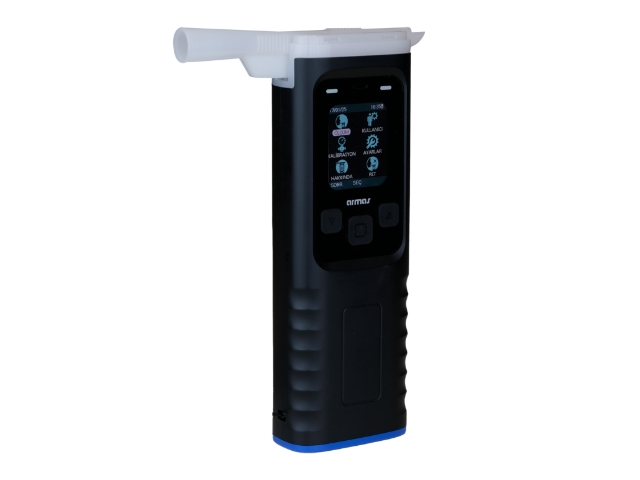
Procuring breath alcohol testers for an institution is a different exercise from buying a single device. The decision-maker is rarely the end user, the equipment serves dozens or hundreds of people, and the commitment runs for years. This guide walks through the process — from defining the requirement to evaluating suppliers and calculating true cost.
Why Institutional Procurement Is Different
In a tender or corporate purchase, the device itself is only part of the decision. How long it will remain in service, what happens when it fails, who trains the operators and where the results will be used all weigh as heavily as the product specification.
Added to this is the obligation to justify the decision. Public bodies and corporate procurement teams must be able to document why a particular class of equipment was selected. That is why the process should begin not with "which device is best" but with "what does this organisation actually need".
Step One: Define the Requirement
Determine where the result will be used
This single question shapes everything downstream. If a measurement will support an administrative or legal process, the required device class differs from equipment used for internal monitoring. Devices used in official procedures are known as evidential breathalyzers and carry different documentation requirements.
Clarify the operating scenario
Whether the device will be used in the field, inside a vehicle or at a facility entrance determines the product family. For pre-drive checks inside vehicles, alcohol ignition interlock systems apply; for high-volume shift changes, contact-free testers are the practical choice.
Quantify users and usage intensity
A device used a few times a day and one placed where hundreds pass at every shift change call for different characteristics. Intensity also drives spare unit requirements, consumable planning and the scope of training.
Define recording and reporting needs
Whether results stay on paper, are printed, or transfer to a central system must be decided up front. This is the most expensive requirement to retrofit later.
| Organisation type | Typical scenario | Relevant device class |
|---|---|---|
| Police, enforcement agencies | Field testing, results used in official procedure | Evidential (professional) breathalyzer |
| Municipalities, public transport operators | Pre-trip driver screening | Vehicle breathalyzer / ignition interlock |
| Logistics and haulage companies | Terminal departure checks, central records | Telematics-integrated vehicle breathalyzer |
| Manufacturing plants, sites, mines | High-throughput checks at shift entry | Contact-free breath alcohol tester |
| Hospitals, health institutions | Internal monitoring and record keeping | Breathalyzer with printer / data logging |
Step Two: Writing the Specification
The technical specification is the most consequential document in the process. A well-written one achieves two things at once: it meets the organisation's real requirement, and it protects the quality threshold without narrowing competition.
| Specification item | How to define it | Why it matters |
|---|---|---|
| Intended use | State clearly in which process and by whom the device will be used | Vague purpose statements are the most common cause of buying the wrong device class |
| Conformity documentation | Name the compliance documents required | Documentation shows the product passed independent assessment |
| Recording and reporting | Define how results are stored and transferred | The hardest and costliest capability to add afterwards |
| Training | State the scope of operator training and who delivers it | Untrained use makes correct equipment look unreliable |
| Warranty and service | Require warranty term, service response commitment and spare part undertaking | This line determines real cost across the service life |
| Delivery and commissioning | Clarify installation responsibility for systems requiring fitting | For in-vehicle systems, installation is as critical as the device |
| References | Request institutional references of comparable scale | Scale experience distinguishes suppliers more than feature lists |
Describing function and documentation rather than naming a brand or model protects competition and keeps the organisation from becoming dependent on a single supplier. Because your own procurement regulations and internal rules govern the process, the specification should be finalised together with your procurement and legal teams.
Step Three: Evaluating the Supplier
A breath alcohol tester is not a one-off purchase but a multi-year relationship — which makes who you buy from as important as what you buy. This matters even more in cross-border procurement, where distance amplifies every delay.
| Criterion | Buying from the manufacturer | Buying from an importer / reseller |
|---|---|---|
| Technical questions | Direct access to the team that designed the product | Relayed to the manufacturer and awaited |
| Spare parts | Same source as the production line | Dependent on stock and import lead time |
| Custom configuration | Adaptation to organisational needs possible | Usually limited to the standard product |
| Long-term continuity | Product lifecycle owned by the manufacturer | Tied to the distribution agreement continuing |
| Training and commissioning | Delivered directly by the manufacturer | Varies with reseller capability |
Concrete questions worth asking: Who manufactures the product? Who handles service and spare parts? Which comparable organisations have been supplied? Is operator training included? For international buyers, add: what are the lead times, and is OEM or private-label configuration possible?
Step Four: Calculate Lifecycle Cost
The most frequent mistake in institutional procurement is deciding on unit price alone. The real cost to the organisation is the sum of everything that appears across the service life:
- Consumables: items requiring regular resupply
- Maintenance and service: keeping equipment ready for use
- Training: repeated whenever personnel change
- Spare units: capacity to cover devices in service
- Integration: software work where data must reach existing systems
A low unit price becomes expensive overall if the service network is weak or spare part supply is slow. Comparisons should therefore be made on projected total cost across the service life, not on list price.
Common Procurement Mistakes
- Skipping the purpose definition: a process that begins with "we need breathalyzers" frequently ends with the wrong device class.
- Deferring the recording requirement: when reporting needs surface after purchase, the remedy is usually another purchase.
- Excluding training: correct equipment used incorrectly still produces results that look unreliable.
- Ignoring service capability: downtime after a fault is downtime for the operation.
- Not asking about scale: a five-unit deployment and a five-hundred-unit deployment demand different capabilities.
Working With ARMAS Elektronik
ARMAS Elektronik has been manufacturing breath alcohol screening systems and emergency vehicle equipment since 2005. Design, production, sales and after-sales service are handled in-house; manufacturing takes place in Türkiye and products are exported worldwide.
- Quality management: ISO 9001 and ISO 13485
- Product conformity: DOT/NHTSA, EN and CE documentation for breath alcohol testers — see our certificates page
- Institutional track record: supply to national police, gendarmerie, armed forces, coast guard and health authorities — see our references
- In-house R&D centre: product development managed internally
- Export and OEM: worldwide distribution and cooperation with vehicle manufacturers
The process starts with your operating scenario. Once organisation type, user numbers and reporting requirements are clear, a suitable configuration and quotation are prepared. Browse our breath alcohol tester range or contact our team to discuss your requirement.
Frequently Asked Questions
Which device class should our organisation choose?
The deciding question is where the result will be used. If it supports an administrative or legal process, evidential devices apply; for internal monitoring, other classes are evaluated against the operating scenario. Share your scenario and we can identify the right class together.
Should we name a brand in the specification?
Describing function and required documentation rather than a brand protects competition and avoids single-supplier dependency. The specification should be finalised with your own procurement and legal teams.
How does the quotation process work for volume orders?
Once the application, unit quantity, installation requirement and reporting needs are established, a configuration is defined and a quotation prepared. Reach us through the contact page and our sales team will plan the process with you.
Do you support export projects and OEM configurations?
Yes. ARMAS Elektronik exports worldwide and works with vehicle manufacturers on OEM programmes. Distribution agreements, project-based configurations and private-label arrangements can be discussed through our contact page.
Is operator training provided?
Yes. Because correct use determines how reliable results appear, operator training is planned as part of commissioning. Scope depends on organisation size and device type.
How are after-sales service and spare parts handled?
ARMAS Elektronik manages maintenance and technical service for its own products, in-house and through its dealer network. As the manufacturer, we handle spare part supply and technical support directly.
Can different device types be combined in a single procurement?
Yes. Many organisations run field enforcement, in-vehicle screening and facility entry scenarios simultaneously. Products suited to each can be planned under a single configuration.