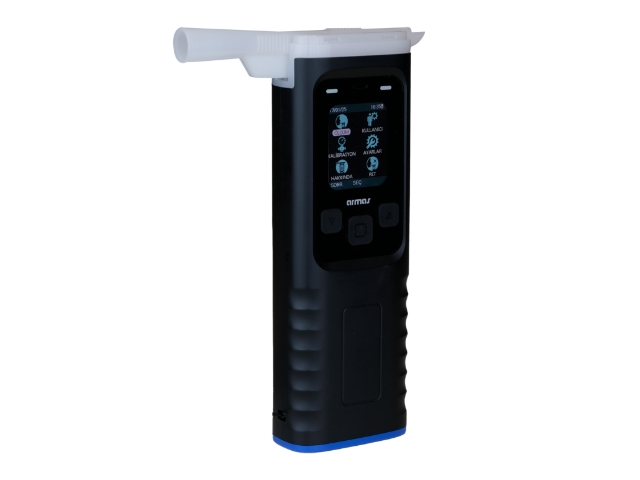
Every time a bus or shuttle pulls away from the stop, the operator behind it takes on responsibility for every passenger on board. That is why public transport alcohol screening should never depend on occasional spot checks; it belongs in the daily operating routine of every passenger fleet. This guide looks at how bus companies, shuttle operators and school transport providers can build pre-trip screening into day-to-day operations — from depot pull-out to shift handovers, documentation and reporting.
Why Passenger Fleets Carry a Different Duty of Care
When something goes wrong in cargo transport, the loss is usually material. In passenger transport, the stakes are human lives — and the consequences reach far beyond a single trip. A municipal bus network, a staff shuttle contractor or a school transport provider answers to passengers, contracting clients and the wider public at the same time. One serious incident can undo years of reputation building and put existing contracts in question.
For a fleet operator, verifying that a driver is fit to take the wheel is therefore not a matter of trust or habit. It is a management control — and like any control, it only works when it is systematic, documented and applied without exception.
Making Pre-Trip Screening Part of the Daily Routine
The most common weakness in screening programmes is inconsistency. A check that happens on some days, for some drivers, quickly loses its deterrent value. The goal is to make screening a natural step in vehicle sign-on, alongside the walkaround inspection:
- At sign-on: the check is completed when the driver reports for duty, before the vehicle leaves the depot or holding area.
- On the checklist: screening is added to the same pre-departure checklist as fuel, tyres and lights, so it is perceived as routine rather than accusation.
- Without exception: every driver goes through the same procedure regardless of seniority or schedule, which keeps the policy fair and beyond dispute.
Operators who want this flow guaranteed by the system rather than by supervision turn to vehicle breathalyzers and alcohol ignition interlock systems: with an alcohol ignition interlock on board, the vehicle simply does not move until the check is complete, taking the procedure out of individual hands.
Relief Drivers, Split Shifts and Multi-Stop Routes
What sets passenger fleets apart from most other operations is that the same vehicle is often driven by several people in one day. A check performed at morning pull-out says nothing about the relief driver who takes over at midday, or the colleague who resumes driving after a rest break on a long-distance route. Screening therefore has to follow the driver and the trip, not the depot:
- When drivers hand over mid-route, the incoming driver completes a check before taking the wheel.
- On intercity and long-distance services, the check is repeated when driving resumes after breaks.
- Relief, standby and substitute drivers follow exactly the same procedure as the core roster.
This is where in-vehicle solutions such as NAMLock-10 earn their place: because the check happens in the vehicle itself, it applies to whoever is behind the wheel, on every trip. Engine-locking and tracking-integrated variants of the same family extend this principle to stricter enforcement and central oversight.
Risk Scenarios by Fleet Type
Each passenger operation has its own risk profile. The table below summarises the scenarios a bus fleet breathalyzer programme should be designed around:
| Fleet Type | Typical Risk Scenario | Recommended Approach |
|---|---|---|
| City bus | Several drivers per vehicle per day, intensive schedules | In-vehicle screening covering every driver, central oversight |
| Staff shuttle | Early-morning and night-shift runs, single-driver vehicles | Screening tied to vehicle departure at sign-on |
| School transport | Young passengers, close scrutiny from parents and schools | Engine-locking interlock with transparent reporting |
| Intercity coach | Long routes, driving resumed after rest breaks | Screening at departure and again after breaks |
| Airport / hotel transfer | High trip frequency, rotating driver rosters | Tracking-integrated screening monitored from the fleet office |
What Corporate Clients and Schools Expect
Shuttle and school transport work is contract business, and safety practice is increasingly part of how those contracts are won and kept. A company that can demonstrate a documented shuttle service alcohol testing procedure — who is checked, when, and how it is recorded — gives its corporate clients something concrete to rely on. For school transport the effect is even stronger: parents and school administrations cannot supervise the journey themselves, so a visible, consistently applied screening policy becomes one of the clearest signals of professionalism an operator can offer.
Records, Reporting and Accountability
Performing the check matters; being able to show it was performed matters just as much. Practical record-keeping for a passenger fleet looks like this:
- Each check is recorded against the trip and the driver, as part of normal dispatch documentation.
- Records are retained for internal audits, client reporting and any dispute where the operator's diligence may be examined.
- Fleet management reviews the records periodically to confirm the procedure is actually being followed on the road, not just written in the manual.
Tracking-integrated solutions support this practice by letting fleet managers follow screening activity alongside their existing fleet-management infrastructure, instead of collecting paper forms from every depot.
Choosing a Programme: Questions to Ask Your Supplier
Device categories and general selection criteria are covered in detail in our vehicle breathalyzer selection guide; the checklist below approaches the decision specifically from a passenger-operations angle:
| Criterion | Why It Matters | Question to Ask |
|---|---|---|
| Fleet size and vehicle mix | The programme must scale to the whole fleet at one standard | Can the same system be deployed across different vehicle types? |
| Shift patterns | Several drivers may take the wheel of one vehicle each day | How does the screening flow work at driver handover? |
| Reporting needs | Management and clients expect transparency | Can screening activity be monitored centrally? |
| After-sales support | Passenger operations cannot tolerate downtime | Who provides service and support, and through which channels? |
| Certification | Corporate and public procurement requires documentation | Which conformity and quality certificates do the devices hold? |
Working Directly with the Manufacturer: ARMAS Elektronik
ARMAS Elektronik has been manufacturing emergency vehicle equipment and alcohol measurement systems since 2005. Production takes place in Ankara, Türkiye, and products are exported worldwide. Design, manufacturing, sales and after-sales services are all handled in-house, backed by a dedicated R&D centre. The company holds ISO 9001 and ISO 13485 quality certifications, and its breathalyzers carry DOT/NHTSA, EN and CE conformity documentation. References across public institutions — including police, gendarmerie, armed forces, coast guard and the Ministry of Health — reflect the products' standing in institutional use.
If you are planning a pre-trip screening programme for your bus or shuttle fleet, you can reach us through our contact page to discuss your operation's requirements.
Frequently Asked Questions
When should pre-trip alcohol screening take place?
Best practice is a check at the start of every trip and at every driver change. On long-distance routes, the check should also be repeated when driving resumes after rest breaks.
How do we cover vehicles that change drivers during the day?
Tie the screening to the vehicle rather than the depot. In-vehicle systems that prevent the engine from starting until the check is complete ensure that every driver who takes the wheel goes through the same procedure.
Does screening help us win shuttle and school transport contracts?
A documented screening procedure gives contracting clients, schools and parents concrete evidence of your safety culture, and it is an increasingly common differentiator in competitive bids for passenger transport work.
Why should screening records be kept?
Records demonstrate the operator's diligence in internal audits, client reporting and any dispute. They turn a good practice into verifiable proof that the procedure is applied consistently.
How do we choose the right system for our fleet?
Fleet size, shift patterns and reporting needs are the main factors. Our selection guide covers device categories in detail, and ARMAS Elektronik can assess your specific operation on request.
Who provides installation and after-sales support?
ARMAS Elektronik handles design, manufacturing, sales and after-sales services entirely in-house, so fleet operators receive support directly from the manufacturer.