On construction sites, in mines and on production floors, a single lapse in attention can have serious consequences. Working at height, heavy plant movement, blasting operations and rotating machinery leave very little margin for impaired judgement. That is why workplace alcohol testing has become a standard element of the safety culture at many high-risk operations worldwide. This guide is not about device specifications — it is about building a shift entry alcohol screening program that actually works on a busy site: policy design, entry flow, queue management, hygiene, record keeping, contractor coverage and worker privacy.
Why the Shift Gate Is the Right Control Point
The start of the shift is the one moment when every worker passes through a single, predictable point — before tools are picked up, before plant keys are handed over and before anyone goes underground. Screening at this point means a risk is identified before work begins, not after.
Screening everyone at the gate also protects the fairness of the program. Selective, "who looks suspicious" checks are the fastest way to lose workforce trust. A uniform gate procedure signals that the program is about the site, not about individuals — and acceptance of any construction site alcohol policy depends heavily on that perception of neutrality.
Policy Before Hardware
Successful programs share one trait: the written policy exists before the first device arrives on site. The policy should define who is covered, when screening takes place, how results are handled and how records are stored — and it should be communicated to the workforce well before the first shift under the new rules.
An important note before going further: workplace alcohol screening touches employment law, and legal frameworks differ widely between countries, industries and even collective agreements. In common practice, screening is run within a framework of employee consent and written company policy. The details — scope, consequences, data retention — should always be defined together with your organisation's legal counsel. Nothing in this article is legal advice.
A workable policy document typically covers:
- Scope: direct employees, contractor crews, visitors and vehicle or plant operators
- Timing: shift entry as the baseline, plus post-incident and for-cause scenarios
- Flow: location of the checkpoint, responsible staff and peak-hour arrangements
- Result handling: secondary verification, who is informed and what happens next
- Privacy: who can access results and how records are protected
Designing the Entry Flow: Throughput, Queues and Hygiene
The first place a program fails in practice is the queue. Shift changes happen in a narrow time window, and a slow checkpoint at a crowded turnstile costs paid minutes and goodwill every single day. Position the checkpoint immediately before the turnstile line so it sits inside the natural walking flow, and plan more than one screening lane at high-headcount sites.
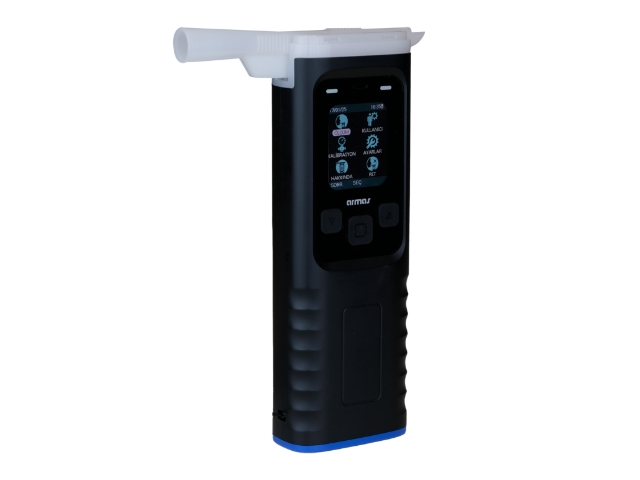
Hygiene is the second major concern. When one screening point serves an entire shift, workers understandably hesitate about anything involving mouth contact — and that hesitation quickly turns into resistance. This is why many operations choose a contact-free arrangement for high-volume gates; you can see how this approach works on our contact-free breath alcohol tester page. The NAM-C20 was developed precisely for this scenario: crowded entry points where flow and hygiene both matter.
| Facility type | Typical risk scenario | Key requirement | Common approach |
|---|---|---|---|
| Construction site | Work at height, cranes and heavy plant | Fast throughput for multiple contractor crews | Contact-free screening at the main gate at shift start |
| Mining operation | Going underground, blasting and haulage | Complete coverage before anyone goes below | Checkpoint at the lamp room or muster point exit |
| Manufacturing plant | Rotating machinery and forklift traffic | No slowdown during shift changeover | Screening lane before the turnstiles, extra lane at peaks |
| Logistics yard | Vehicle and plant operation | Operator check before dispatch | Screening before vehicle keys are issued |
Records, Reporting and Worker Privacy
Running the checks matters; being able to demonstrate that they ran matters just as much. In HSE audits and incident investigations, orderly records showing when and where screening took place are the program's most valuable output. Paper logs are slow and error-prone, so many operations manage records and reporting digitally with a data management solution such as NAM DataPro.
On privacy, the widely adopted approach is straightforward: results are accessible only to authorised personnel, they are never announced in front of the crowd, and records are stored in line with the organisation's data protection policies. Defining access rights and retention rules in the policy itself protects both the worker and the company.
Contractors and Visitors
On large projects, a substantial share of the people on site work for subcontractors. A program that covers only direct employees creates an obvious double standard at the gate. The approach preferred at many operations is to write the screening requirement into contractor agreements and site entry rules, and to explain it to every crew during site induction. Visitors and short-term personnel should be addressed explicitly in the site rules as well — it prevents arguments at the gate before they start. Contract wording is another item to settle with your legal counsel.
| Program step | Owner | Output |
|---|---|---|
| Needs and risk assessment | HSE manager | Checkpoint locations and proposed scope |
| Policy drafting | HR and HSE | Written workplace alcohol policy |
| Legal review | Legal counsel | Consent, scope and record-keeping rules confirmed |
| Workforce communication and training | HR, site management | Announcement, training records, Q&A sessions |
| Pilot phase | Site manager | Queue and flow observations, adjustments |
| Full rollout and reporting | HSE manager | Ongoing records and management reports |
Handling a Flagged Result
When the gate screening flags a worker, the approach preferred at many operations is to take the person aside discreetly and run a secondary, individual check in a private area. This protects the worker's dignity and ensures no decision rests on a single reading — ARMAS offers the NAM-C20M personal measurement device for exactly this verification step. What happens after verification is defined by company policy, not improvised at the gate; having those steps written down in advance removes the pressure of on-the-spot decisions. You can review suitable device combinations for gate screening and private verification across our breath alcohol testers range.
About ARMAS Elektronik
ARMAS Elektronik has been manufacturing emergency vehicle equipment and breath alcohol measurement systems since 2005. Design, production, sales and after-sales service are all handled in-house at our facilities in Ankara, Türkiye, and our products are exported worldwide. We operate our own R&D centre and hold ISO 9001 and ISO 13485 quality certifications; our breath alcohol testers carry DOT/NHTSA, EN and CE conformity approvals. Our solutions are used by national institutions including the Turkish Police, Gendarmerie, Armed Forces, Coast Guard and Ministry of Health. To discuss a screening setup for your site, get in touch with our team.
Frequently Asked Questions
Which facilities benefit most from shift entry alcohol screening?
Construction sites, mining operations, manufacturing plants and any site with vehicle or heavy plant operation. The common denominator is a single entry point where every worker starts the shift — that point is the natural home of the program.
How do we avoid queues at crowded shift changes?
Place the checkpoint inside the natural walking flow just before the turnstiles, open more than one screening lane at high-headcount sites, and use a contact-free arrangement at high-volume gates. Use the pilot phase to observe the flow and adjust the layout before full rollout.
Do workers have to consent to alcohol testing?
In common practice, workplace screening operates within a framework of employee consent and written company policy, and legal requirements vary significantly by country and industry. Scope, consent and consequences should be defined together with your organisation's legal counsel rather than copied from another site's program.
How should screening records be kept and who sees them?
The widely adopted approach is digital record keeping with access restricted to authorised personnel. A data management solution such as NAM DataPro keeps records and reporting orderly. Retention periods and access rights should be defined in the company policy.
Can contractor personnel be included in the program?
Yes — at many operations the screening requirement is written into contractor agreements and site entry rules, so every crew on site follows the same procedure. This removes the double-standard perception at the gate. Contract wording should be reviewed with your legal counsel.
Is a shared screening point a hygiene problem?
Concerns about mouth contact are one of the most common sources of workforce resistance. That is why contact-free screening is widely preferred at shared, high-volume entry points, with individual verification carried out separately in a private area using a personal device.